
Building a truly inclusive workplace requires more than just good intentions; it demands strategic action. Corporate training for diversity and inclusion (DE&I) isn’t simply a box-ticking exercise; it’s a transformative journey that fosters a culture of belonging, innovation, and improved business outcomes. This exploration delves into the multifaceted aspects of designing, implementing, and sustaining effective DE&I training programs.
From conducting thorough needs assessments to crafting engaging curricula and measuring the impact of these initiatives, we will examine the critical steps involved in creating a workplace where every individual feels valued, respected, and empowered to contribute their unique talents. We will also address common challenges and offer practical solutions for organizations seeking to cultivate a sustainable culture of diversity and inclusion.
Defining Diversity and Inclusion in Corporate Settings
Diversity and inclusion (D&I) are crucial components of a thriving corporate environment. They move beyond simple compliance and represent a strategic imperative for fostering innovation, improving employee engagement, and enhancing a company’s overall reputation. This section will explore the core principles of diversity, equity, and inclusion (DE&I) in the workplace, detailing their positive impacts and outlining the substantial business benefits derived from robust DE&I programs.
DE&I initiatives are not merely about ticking boxes; they are about creating a workplace where every employee feels valued, respected, and empowered to contribute their unique skills and perspectives. Diversity encompasses the presence of individuals with varied backgrounds, experiences, perspectives, and identities, including but not limited to race, ethnicity, gender, sexual orientation, age, disability, and socioeconomic status. Equity focuses on creating fair and just opportunities for all employees, acknowledging and addressing systemic barriers that may prevent certain groups from accessing those opportunities.
Inclusion goes beyond representation and involves creating a culture where everyone feels a sense of belonging, psychological safety, and genuine participation.
DE&I Principles in Corporate Environments
The core principles of DE&I in corporate settings revolve around fostering a culture of respect, fairness, and equal opportunity. This involves actively recruiting and retaining a diverse workforce, providing inclusive leadership training, implementing equitable compensation and promotion practices, and creating a work environment free from discrimination and harassment. Companies must commit to ongoing education and training for all employees to raise awareness of unconscious bias and promote inclusive behaviors.
A commitment to transparency and accountability in DE&I efforts is paramount. Regularly assessing progress and making necessary adjustments is vital for success.
Positive Work Culture Contributions of DE&I Initiatives
Robust DE&I programs significantly contribute to a positive and productive work culture. When employees feel valued and respected for who they are, their engagement and productivity increase. Diverse teams are better equipped to solve complex problems, foster creativity, and understand diverse customer bases. A culture of inclusion promotes open communication, collaboration, and a sense of belonging, leading to reduced employee turnover and increased morale.
Improved employee well-being directly impacts the bottom line, resulting in greater overall efficiency and profitability.
Business Benefits of Implementing Robust DE&I Programs
Implementing comprehensive DE&I programs offers substantial business advantages. Studies have consistently shown a positive correlation between diversity and financial performance. Companies with diverse leadership teams tend to outperform their less diverse counterparts. Increased innovation, improved brand reputation, enhanced customer relations, and a more engaged and productive workforce all contribute to significant financial gains. Moreover, attracting and retaining top talent is easier for organizations with a strong DE&I track record.
This competitive advantage is increasingly crucial in a tight labor market.
Comparison of Diversity and Inclusion Frameworks
Various frameworks exist to guide the implementation of DE&I initiatives. The following table compares four prominent approaches:
| Framework | Focus | Key Strategies | Strengths |
|---|---|---|---|
| Affirmative Action | Addressing historical discrimination through proactive measures to increase representation of underrepresented groups. | Targeted recruitment, mentorship programs, and preferential treatment in certain circumstances. | Legally mandated in some contexts; demonstrably increases representation. |
| Diversity Training | Raising awareness of unconscious biases and promoting inclusive behaviors. | Workshops, online modules, and ongoing education initiatives. | Increases awareness and understanding; can lead to behavioral changes. |
| Inclusion Initiatives | Creating a culture where everyone feels valued, respected, and empowered. | Employee resource groups, mentorship programs, inclusive leadership training. | Fosters a sense of belonging and psychological safety; improves employee engagement. |
| Intersectionality | Recognizing and addressing the overlapping and interdependent systems of discrimination. | Data-driven analysis of disparities; tailored interventions to address specific needs. | Provides a more nuanced and comprehensive approach to DE&I; addresses systemic inequities. |
Needs Assessment for Corporate Training
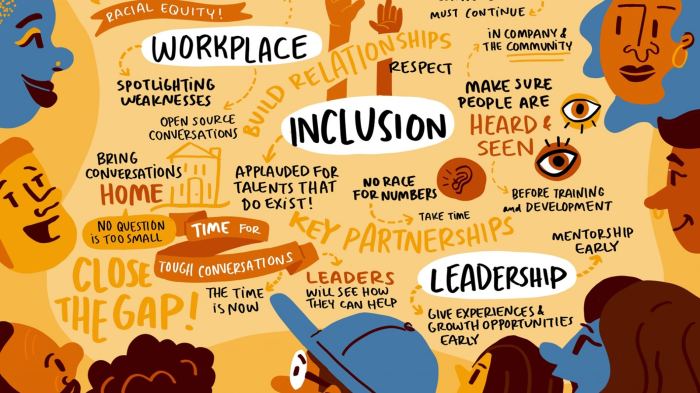
A comprehensive needs assessment is crucial for developing effective diversity and inclusion (D&I) training. It ensures the training directly addresses the organization’s specific challenges and contributes meaningfully to a more inclusive workplace. Ignoring this step can lead to wasted resources and a training program that fails to achieve its objectives. This process involves identifying areas needing improvement, gathering data to understand the current state, and designing training to fill the gaps.A thorough needs assessment involves systematically analyzing various aspects of the organization to pinpoint areas needing D&I training.
This might include reviewing existing data on employee demographics, conducting surveys and focus groups, and interviewing key stakeholders to gain a comprehensive understanding of the organization’s culture and climate. The goal is to identify specific behaviors, policies, or processes that are contributing to an unwelcoming or inequitable work environment. This information will directly inform the content and focus of the subsequent training.
Identifying Areas Needing D&I Training
To illustrate, imagine a hypothetical technology company, “InnovateTech,” with a predominantly male engineering team and a significant gender pay gap. A needs assessment might reveal a lack of female representation in leadership positions, unconscious bias in hiring practices, and limited opportunities for professional development for women. Furthermore, employee surveys might indicate a lack of awareness regarding microaggressions and a general feeling of exclusion among underrepresented groups.
These findings would clearly indicate specific areas requiring targeted training. Other areas could include addressing implicit bias, promoting inclusive leadership, fostering effective communication across diverse groups, or understanding and responding to various cultural norms within the workforce.
Conducting a Thorough Needs Assessment
A robust needs assessment utilizes multiple data collection methods. This might involve analyzing existing HR data (such as employee demographics, performance reviews, and disciplinary actions), conducting anonymous employee surveys to gauge perceptions of inclusivity and identify areas of concern, and organizing focus groups with employees from different departments and backgrounds to gather qualitative data. Interviews with managers and senior leaders can provide valuable insights into organizational culture and potential barriers to diversity and inclusion.
The data gathered through these methods should be analyzed to identify patterns, trends, and specific areas needing attention.
Developing a Detailed Training Plan
Based on the needs assessment, a detailed training plan should be developed. This plan will Artikel specific learning objectives, identify the target audience for each training module, and define methods for evaluating the training’s effectiveness. For example, if the needs assessment revealed a lack of awareness regarding microaggressions, a training module could be designed to educate employees on what constitutes a microaggression, its impact, and strategies for responding appropriately.
The target audience might be all employees, and the evaluation could involve pre- and post-training assessments to measure changes in knowledge and attitudes. Another module might focus on inclusive leadership practices, targeting managers and supervisors, with evaluation based on observation of changed behaviors in the workplace.
Gathering Feedback from Employees
Gathering feedback from employees is essential to ensure the training is relevant, engaging, and effective. This can be achieved through various methods, including anonymous post-training surveys, focus groups, and informal feedback sessions. Surveys can assess employee satisfaction, knowledge gained, and perceived changes in behavior. Focus groups allow for in-depth discussion and exploration of specific aspects of the training.
Informal feedback sessions, such as brief conversations with employees, can provide immediate insights and allow for adjustments during the training program itself. Analyzing this feedback is crucial for iterative improvement and ensuring the training program remains responsive to employee needs.
Designing Effective Diversity and Inclusion Training Programs
Creating a truly effective diversity and inclusion (D&I) training program requires careful planning and execution. It’s not enough to simply check a box; the program must foster genuine understanding, empathy, and a commitment to inclusive behaviors. A well-designed program will equip participants with the knowledge and skills to create a more equitable and respectful workplace.
Comprehensive Diversity and Inclusion Training Curriculum
A robust curriculum should cover a range of topics, building upon foundational knowledge to address complex issues. This ensures a holistic approach to D&I, moving beyond simple awareness to practical application. The curriculum should be modular, allowing for flexibility and adaptation to the specific needs of the organization and its employees.
- Module 1: Defining Diversity and Inclusion: This module establishes a common understanding of diversity (including dimensions such as race, ethnicity, gender, sexual orientation, age, disability, religion, and socioeconomic background) and inclusion (creating an environment where everyone feels valued, respected, and able to contribute their full potential). It will also explore the business case for D&I.
- Module 2: Unconscious Bias: This module delves into the science of implicit bias, exploring how unconscious biases impact decision-making and workplace interactions. It provides practical strategies for mitigating bias.
- Module 3: Microaggressions and Inclusive Communication: This module defines microaggressions and provides examples of how they manifest in the workplace. It also focuses on developing inclusive communication skills that promote respect and understanding.
- Module 4: Inclusive Leadership: This module equips leaders with the skills to foster inclusive teams, create equitable opportunities, and address issues of bias and discrimination effectively.
- Module 5: Bystander Intervention: This module empowers participants to safely intervene when they witness bias or discrimination, providing strategies for effective and appropriate action.
Interactive Exercises and Activities
Engaging activities are crucial for effective learning and knowledge retention. Interactive elements encourage active participation, fostering a deeper understanding and application of the training content. They also create a safe space for participants to explore their own biases and assumptions.
- Role-playing scenarios: Participants act out workplace situations involving bias or discrimination, practicing responses and strategies for creating inclusive environments.
- Group discussions and debates: Facilitated discussions allow for the sharing of perspectives and experiences, fostering empathy and understanding.
- Case studies: Analyzing real-world examples of successful and unsuccessful D&I initiatives helps participants learn from others’ experiences.
- Self-assessment tools: These tools help participants identify their own biases and areas for improvement, promoting self-reflection and personal growth.
Case Studies Illustrating D&I Initiatives
Case studies provide concrete examples of the challenges and successes of D&I programs. Learning from both positive and negative outcomes allows for a more nuanced understanding of the complexities involved in implementing effective D&I strategies.
- Example 1: A company that successfully implemented a mentorship program for women in leadership, resulting in increased representation at senior levels. The case study would detail the program’s design, implementation, and outcomes, highlighting best practices.
- Example 2: A company that faced challenges in implementing a diversity recruitment strategy, and the steps they took to address the issues and improve their approach. This would highlight the importance of ongoing evaluation and adjustment.
Sample Training Module: Unconscious Bias
This module focuses on understanding and mitigating unconscious bias. It uses a combination of educational content, interactive exercises, and self-reflection activities to achieve its objectives.
- Introduction to Unconscious Bias: This section defines unconscious bias, explaining its origins and impact on decision-making. It includes examples of how unconscious bias manifests in the workplace, such as in hiring, promotion, and performance evaluations.
- Identifying and Challenging Bias: This section provides practical strategies for identifying and challenging personal biases. It includes exercises to help participants recognize their own biases and develop strategies to mitigate their influence.
- Building Inclusive Practices: This section focuses on creating inclusive practices in the workplace. It includes examples of policies and procedures that can help reduce bias and promote fairness.
- Case Studies: This section presents real-world examples of how unconscious bias has impacted workplace decisions and the strategies used to address the issues.
Measuring the Impact of Diversity and Inclusion Training
Effective diversity and inclusion (D&I) training requires a robust evaluation process to demonstrate its impact and justify its ongoing investment. Measuring the success of such programs goes beyond simple attendance; it involves assessing changes in employee attitudes, behaviors, and the overall workplace culture. This requires a multi-faceted approach using various data collection methods and metrics.
A comprehensive evaluation strategy should incorporate both quantitative and qualitative data to provide a holistic understanding of the training’s effectiveness. Quantitative data offers measurable results, while qualitative data provides richer insights into the nuances of employee experiences and perceptions. Combining these approaches allows for a more complete picture of the program’s impact.
Methods for Evaluating D&I Training Effectiveness
Several methods can be employed to assess the effectiveness of D&I training. Pre- and post-training surveys are a common approach, measuring changes in employee knowledge, attitudes, and perceived behaviors related to diversity and inclusion. Focus groups can provide valuable qualitative data, allowing participants to share their experiences and perspectives in a moderated discussion. Observations of workplace interactions, both formal and informal, can reveal changes in behavior and communication styles.
Finally, analyzing diversity metrics such as representation in leadership roles and employee satisfaction scores can indicate the broader impact of the training on the organization’s overall D&I goals.
Metrics for Measuring Changes in Employee Attitudes, Behaviors, and Workplace Culture
Measuring the impact of D&I training necessitates the use of specific metrics. Changes in employee attitudes can be tracked through survey questions assessing comfort levels in diverse settings, understanding of unconscious bias, and willingness to engage in inclusive behaviors. Behavioral changes can be observed through improved communication styles, increased collaboration across diverse teams, and reduced instances of microaggressions.
Workplace culture shifts can be measured by analyzing employee feedback on inclusivity, perceptions of fairness, and overall job satisfaction. For example, a company might track the number of reported incidents of discrimination before and after training, or measure employee satisfaction with diversity initiatives through anonymous surveys.
Strategies for Tracking Progress Toward Diversity and Inclusion Goals
Tracking progress toward D&I goals requires a structured approach. Establishing clear, measurable, achievable, relevant, and time-bound (SMART) goals is crucial. Regularly monitoring diversity metrics, such as representation at various organizational levels, provides a quantitative measure of progress. Qualitative data, gathered through employee feedback surveys and focus groups, provides valuable insights into the lived experiences of employees and helps identify areas for improvement.
Regular reporting on progress, both internally and externally (if applicable), ensures accountability and transparency. For instance, a company might set a goal to increase the representation of women in leadership roles by 20% within three years, tracking this progress through regular audits of leadership positions.
A Plan for Collecting and Analyzing Data to Demonstrate ROI of Training
Demonstrating the return on investment (ROI) of D&I training requires a clear plan for data collection and analysis. This includes identifying key performance indicators (KPIs) aligned with the training’s objectives, such as improved employee engagement, reduced turnover, and enhanced company reputation. Collecting pre- and post-training data on these KPIs allows for a comparison of performance before and after the intervention.
Analyzing this data using statistical methods can demonstrate the extent to which the training contributed to positive changes. For example, a company could measure employee turnover rates before and after training, calculating the cost savings resulting from reduced turnover attributed to improved employee satisfaction and retention stemming from the training. The cost of the training program itself (including materials, facilitator fees, and employee time) should be factored into the ROI calculation to determine the overall financial return.
Corporate Growth and Corporate Training
Effective corporate training programs are not merely a cost; they are a strategic investment directly impacting a company’s bottom line. A well-designed training strategy, encompassing diversity, equity, and inclusion (DE&I) initiatives, creates a synergistic relationship between employee development and overall business growth. This results in a more productive, engaged, and ultimately, more profitable organization.Investing in comprehensive training, including DE&I programs, significantly boosts employee productivity and retention.
Training equips employees with the skills and knowledge necessary to perform their jobs effectively, leading to increased efficiency and output. Simultaneously, a supportive and inclusive work environment, cultivated through DE&I training, fosters a sense of belonging and value, reducing employee turnover and associated recruitment costs.Improved employee engagement, a direct outcome of effective training, translates into enhanced customer satisfaction and increased market share.
Employees who feel valued, empowered, and adequately trained are more likely to deliver exceptional customer service. This positive experience fosters customer loyalty and positive word-of-mouth referrals, contributing to increased sales and market dominance.
Examples of Successful DE&I Training Impacting Company Performance
The positive impact of successful DE&I training on a company’s financial performance is demonstrable. Several case studies highlight the tangible benefits. Companies that prioritize inclusive practices often see a direct correlation between their investment in DE&I training and improved financial results.
- Increased Revenue: A study by McKinsey & Company found that companies in the top quartile for gender diversity on executive teams were 25% more likely to have above-average profitability. This demonstrates a clear link between inclusive leadership and financial success. Similarly, companies with diverse workforces often report increased innovation and creativity, leading to the development of new products and services that resonate with broader markets, thereby driving revenue growth.
- Reduced Employee Turnover: Companies with robust DE&I programs often experience lower employee turnover rates. A supportive and inclusive work environment makes employees feel valued and respected, reducing their likelihood of seeking employment elsewhere. This lowers recruitment and training costs, contributing to improved profitability.
- Improved Brand Reputation: Consumers are increasingly drawn to companies that demonstrate a commitment to diversity and inclusion. A strong DE&I reputation can attract top talent, improve customer loyalty, and enhance a company’s overall brand image, ultimately impacting market share and profitability.
- Enhanced Innovation and Creativity: Diverse teams are known to generate more innovative solutions and creative ideas. DE&I training fosters an environment where diverse perspectives are valued and encouraged, leading to more effective problem-solving and ultimately, greater innovation, which directly impacts a company’s competitive advantage and profitability.
Addressing Challenges in Implementing DE&I Training
Implementing and sustaining effective Diversity, Equity, and Inclusion (DE&I) training programs presents several significant hurdles. Organizations often encounter resistance to change, struggle to create truly inclusive training materials, and face the challenge of ensuring the training is perceived as valuable rather than a mere box-ticking exercise. Addressing these challenges requires a proactive and multifaceted approach.Successful DE&I training requires more than simply delivering content; it necessitates a comprehensive strategy that addresses potential obstacles and fosters genuine organizational change.
Resistance to Change within Organizations
Overcoming resistance to DE&I initiatives often stems from a lack of understanding, fear of the unknown, or ingrained biases. Some employees may perceive DE&I training as a threat to their status quo or as an imposition. To overcome this resistance, it’s crucial to clearly communicate the business case for DE&I, emphasizing the benefits such as improved employee morale, increased creativity and innovation, and enhanced reputation.
This communication should be consistent and transparent, involving leadership at all levels. Furthermore, framing DE&I training as an opportunity for personal and professional growth, rather than a punitive measure, can significantly improve buy-in. Providing opportunities for employees to share their concerns and participate in the design and implementation of the training can also foster a sense of ownership and reduce resistance.
Inclusivity and Accessibility in Training Materials and Delivery
Ensuring inclusivity and accessibility in DE&I training materials and delivery methods is paramount. Training materials should be designed to be accessible to employees with diverse learning styles, abilities, and backgrounds. This includes using plain language, avoiding jargon, and providing multiple formats such as audio, video, and text. Consider incorporating visual aids and interactive elements to enhance engagement. For employees with disabilities, ensure compliance with accessibility standards such as WCAG (Web Content Accessibility Guidelines).
Furthermore, the training delivery method should accommodate diverse learning preferences and schedules. Offering both in-person and online options, as well as flexible scheduling, can improve participation and accessibility. Subtitles and transcripts should be provided for all video content.
Addressing “Mandatory” or “Check-the-Box” Perceptions
One of the biggest challenges is combating the perception that DE&I training is simply a compliance exercise. To address this, the training must be engaging, relevant, and impactful. It should focus on practical skills and knowledge that employees can immediately apply in their daily work. The training should also emphasize the importance of ongoing learning and development, rather than a one-time event.
Involving employees in the design and delivery of the training can help create a sense of ownership and commitment. Regular follow-up sessions and opportunities for feedback can reinforce the training’s value and demonstrate the organization’s commitment to DE&I. Measuring the impact of the training and sharing the results with employees can also help demonstrate its value and effectiveness.
For example, demonstrating improved employee satisfaction scores or a reduction in instances of bias can show tangible results and reinforce the value of the training beyond mere compliance.
Sustaining a Culture of Diversity and Inclusion
Building a truly diverse and inclusive workplace isn’t a one-time event; it’s an ongoing journey requiring consistent effort and commitment. Sustaining a culture of DE&I necessitates embedding its principles into the very fabric of the organization, fostering a sense of belonging for all employees. This involves proactive strategies, consistent communication, and ongoing engagement.Sustaining a culture of diversity and inclusion requires a multifaceted approach that goes beyond initial training.
It necessitates integrating DE&I principles into all aspects of organizational life, from recruitment and promotion to performance reviews and leadership development. This commitment ensures that DE&I isn’t a separate initiative but an integral part of the company’s overall strategy.
Strategies for Embedding DE&I Principles into Organizational Culture
Embedding DE&I principles requires a strategic approach that integrates these values into all aspects of the organization’s operations. This involves aligning DE&I goals with business objectives, integrating DE&I considerations into all HR processes, and fostering a culture of accountability. For example, setting measurable DE&I goals, such as increasing representation of underrepresented groups in leadership positions, and regularly tracking progress toward these goals, demonstrates a commitment to ongoing improvement.
Another example is incorporating DE&I criteria into performance evaluations, recognizing and rewarding employees who actively promote inclusivity.
Ongoing Communication and Reinforcement of DE&I Values
Consistent communication is crucial for reinforcing DE&I values and keeping them at the forefront of employees’ minds. This can be achieved through various channels, including regular newsletters, company-wide announcements, and internal communication platforms. Sharing success stories of DE&I initiatives, highlighting employee contributions, and providing updates on progress toward DE&I goals can keep the momentum going. For instance, a monthly newsletter featuring profiles of employees from diverse backgrounds, showcasing their contributions and experiences, can create a sense of community and belonging.
Furthermore, using internal communication platforms to share relevant articles, resources, and upcoming events related to DE&I keeps employees informed and engaged.
Maintaining Employee Engagement and Participation in DE&I Initiatives
Sustaining employee engagement requires creating opportunities for ongoing participation and feedback. This can involve establishing employee resource groups (ERGs), organizing regular DE&I events, and providing opportunities for employees to share their experiences and perspectives. For instance, holding regular workshops and training sessions on topics such as unconscious bias or inclusive leadership can keep employees engaged and informed. Furthermore, soliciting regular feedback through surveys, focus groups, and suggestion boxes allows the organization to understand employee perspectives and make necessary adjustments to its DE&I initiatives.
A company could also implement a system for employees to anonymously report instances of discrimination or harassment, ensuring a safe space for reporting and addressing concerns.
Building a Mentorship or Sponsorship Program
Mentorship and sponsorship programs are invaluable for supporting diversity and inclusion efforts. Mentorship pairs experienced employees with those from underrepresented groups, providing guidance, support, and career development opportunities. Sponsorship involves senior leaders actively advocating for the advancement of their mentees, opening doors to opportunities that might otherwise be inaccessible. A well-structured program should include clear guidelines, regular check-ins, and a system for tracking progress and outcomes.
For example, a company could implement a formal mentorship program with clear goals and timelines, matching mentors and mentees based on shared interests and career aspirations. Additionally, the company could offer training for mentors on effective mentoring techniques and cultural sensitivity. This structured approach increases the likelihood of success and demonstrates a tangible commitment to supporting diverse talent.
Ultimately, successful corporate training for diversity and inclusion isn’t a destination but an ongoing process of learning, growth, and adaptation. By prioritizing DE&I training, organizations can not only improve their workplace culture but also unlock significant business advantages, including increased employee engagement, improved productivity, and enhanced brand reputation. The commitment to fostering an inclusive environment yields substantial returns, creating a more equitable and thriving workplace for all.
FAQ Summary
What are the legal implications of not providing diversity and inclusion training?
While specific legal requirements vary by location, failing to address workplace discrimination and harassment can lead to significant legal repercussions, including lawsuits and hefty fines. DE&I training can help mitigate legal risks by fostering a culture of respect and understanding.
How can we measure the ROI of diversity and inclusion training?
Measuring ROI involves tracking key metrics such as employee satisfaction, retention rates, productivity levels, and even customer satisfaction scores. Analyzing these metrics before and after the training provides quantifiable evidence of its impact on the bottom line.
How do we address employee resistance to diversity and inclusion training?
Open communication, addressing concerns directly, and emphasizing the business benefits of DE&I are crucial. Framing the training as an opportunity for growth and development rather than a mandate can improve buy-in and engagement.
How often should diversity and inclusion training be updated?
Regular updates are essential to reflect evolving best practices and address emerging challenges. Annual reviews and revisions are recommended, ensuring the training remains relevant and impactful.


