
In today’s rapidly evolving business landscape, possessing the right technical skills is paramount for corporate success. This guide delves into the multifaceted world of technical skills corporate training, exploring its significance, implementation, and measurement. We will examine how effective training programs can bridge the skills gap, enhance employee performance, and ultimately drive organizational growth. From needs assessment to measuring ROI, we cover the crucial elements of a successful training strategy.
We’ll navigate the complexities of designing engaging and effective training programs, comparing various delivery methods and incorporating practical exercises to ensure knowledge retention and application. Furthermore, we’ll address emerging trends and technologies shaping the future of corporate technical skills development, equipping you with the knowledge to build a robust and impactful training initiative.
Needs Assessment for Technical Skills Training
Effective technical skills training begins with a thorough understanding of the existing skills gap within the organization. A well-executed needs assessment ensures that training resources are targeted precisely where they are most needed, maximizing return on investment and aligning training initiatives with overall business goals. This process involves identifying skill deficiencies, analyzing their impact on productivity and efficiency, and developing a training program that directly addresses these shortcomings.Identifying common methods for assessing the technical skills gap within a corporation is crucial for effective training program development.
A comprehensive assessment considers multiple data sources to provide a holistic view of employee capabilities and training needs.
Methods for Assessing Technical Skills Gaps
Several methods can be used to assess the technical skills gap. These methods provide a multifaceted approach, ensuring a thorough understanding of the training needs. Gathering data from multiple sources helps to mitigate bias and provides a more robust picture of the situation.
- Performance Reviews: Analyzing existing performance reviews can reveal areas where employees consistently struggle or require additional support. This provides a historical perspective on performance trends.
- Skills Inventories: Creating a comprehensive skills inventory, often using a standardized questionnaire or database, allows for a systematic review of employee skills across the organization. This provides a clear snapshot of current skill levels.
- Managerial Feedback: Direct input from managers provides valuable insight into employee performance and the skills needed to meet current and future business demands. This provides a practical, real-world perspective.
- Surveys and Questionnaires: Targeted surveys and questionnaires can be used to gather specific information on employee skill levels and training preferences. This allows for direct feedback from the employees themselves.
- Observations and Job Shadowing: Direct observation of employees performing their tasks allows for a real-time assessment of their skills and identifies areas for improvement. This provides a direct and unbiased evaluation.
- Skills Tests and Assessments: Standardized tests and assessments provide objective measurements of employee skill levels. This provides quantifiable data to support training needs.
Aligning Training with Business Objectives
The importance of aligning training with business objectives cannot be overstated. Training programs should directly support the organization’s strategic goals and contribute to improved performance and productivity. Without this alignment, training becomes an inefficient use of resources. For example, if a company is aiming to improve customer satisfaction, training should focus on improving customer service skills. If the goal is to increase efficiency, training should focus on improving process skills.
Sample Needs Assessment Questionnaire
A well-designed questionnaire is an effective tool for gathering data on technical skill deficiencies. The following sample questionnaire focuses on identifying specific skills gaps in data analysis.
| Question | Response Options |
|---|---|
| Rate your proficiency in using SQL for data extraction. | Beginner, Intermediate, Advanced |
| How comfortable are you with data visualization tools like Tableau or Power BI? | Not at all, Somewhat comfortable, Very comfortable |
| Do you have experience with statistical analysis software such as R or Python? | Yes, No |
| How confident are you in your ability to interpret and present data analysis findings? | Not confident, Somewhat confident, Very confident |
| What specific data analysis skills would you like to improve? | (Open text field) |
The Role of Employee Feedback in the Needs Assessment Process
Employee feedback is a critical component of a successful needs assessment. Direct input from employees provides valuable insight into their skill levels, training needs, and preferences. This feedback ensures that the training program is relevant, engaging, and effective. Open communication channels, such as anonymous surveys or focus groups, can encourage honest and candid feedback. This ensures that the training program addresses the actual needs and preferences of the employees, leading to greater engagement and improved results.
Designing Effective Technical Skills Training Programs
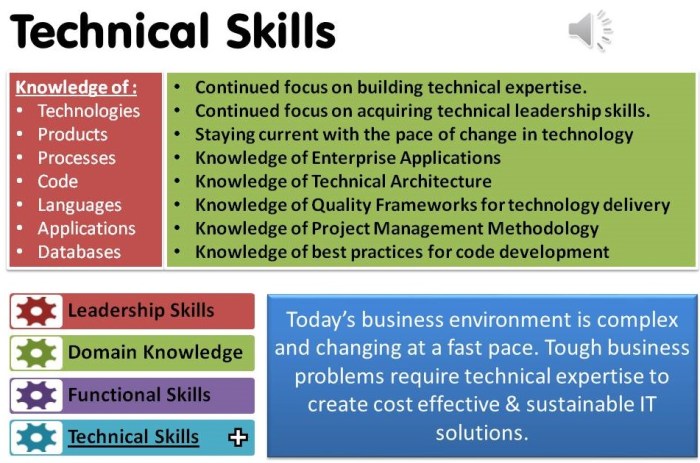
Effective technical skills training programs are crucial for maintaining a competitive edge in today’s rapidly evolving technological landscape. A well-designed program not only imparts necessary skills but also fosters engagement and ensures knowledge retention, ultimately leading to improved employee performance and organizational success. This section explores key aspects of designing such programs.
Best Practices for Engaging and Effective Technical Skills Training
Creating engaging and effective training requires a multifaceted approach. Key elements include clear learning objectives, relevant content tailored to the target audience’s skill level and experience, varied instructional methods to cater to different learning styles, and opportunities for practice and feedback. Furthermore, incorporating real-world scenarios and simulations helps bridge the gap between theoretical knowledge and practical application. Regular assessments throughout the program allow for continuous improvement and adjustments based on participant performance.
Finally, a supportive learning environment that encourages questions and collaboration is essential for maximizing learning outcomes.
Comparison of Training Delivery Methods
Online, in-person, and blended learning methods each offer unique advantages and disadvantages. Online training, delivered via platforms like Learning Management Systems (LMS), offers scalability, flexibility, and cost-effectiveness, particularly for geographically dispersed teams. However, it may lack the immediate interaction and personalized feedback of in-person training. In-person training provides opportunities for direct interaction, collaborative learning, and immediate clarification of doubts. However, it can be expensive, logistically challenging, and less flexible in terms of scheduling.
Blended learning, which combines online and in-person components, aims to leverage the strengths of both approaches, offering a more comprehensive and personalized learning experience. The optimal choice depends on factors such as budget, learner demographics, and the nature of the technical skill being taught. For example, a complex software training program might benefit from a blended approach, combining online modules for self-paced learning with in-person workshops for hands-on practice and instructor-led sessions for complex concepts.
Sample Curriculum: Cybersecurity Awareness Training
This curriculum focuses on enhancing cybersecurity awareness among employees.
| Module | Topics | Activities |
|---|---|---|
| Module 1: Introduction to Cybersecurity Threats | Types of cyber threats (phishing, malware, ransomware), common attack vectors, the importance of cybersecurity awareness. | Interactive quiz, short video case studies of real-world cyberattacks. |
| Module 2: Safe Computing Practices | Password management best practices, recognizing and avoiding phishing attempts, safe browsing habits, securing personal devices. | Role-playing scenarios simulating phishing attempts, hands-on practice creating strong passwords. |
| Module 3: Data Security and Privacy | Data protection regulations (e.g., GDPR, CCPA), handling sensitive data, data loss prevention strategies. | Case study analysis of data breaches and their consequences, group discussion on data privacy policies. |
| Module 4: Social Engineering and Awareness | Understanding social engineering tactics, recognizing and responding to suspicious communications. | Simulated phishing email exercise, discussion on appropriate responses to suspicious emails. |
Incorporating Hands-on Activities and Real-World Case Studies
Hands-on activities and real-world case studies are crucial for effective learning. Hands-on activities allow participants to apply newly acquired knowledge in a practical setting, reinforcing learning and improving skill retention. For example, in a programming training program, hands-on coding exercises would be essential. Real-world case studies, based on actual events or scenarios, provide context and relevance, demonstrating the practical application of the concepts being taught.
For instance, in a cybersecurity training program, a case study of a recent data breach could highlight the consequences of poor security practices and illustrate the importance of preventative measures. These elements transform passive learning into active engagement, significantly improving knowledge retention and skill development.
Measuring the Effectiveness of Technical Skills Training
Effective technical skills training requires a robust evaluation process to determine its impact on employee performance and organizational goals. Measuring the effectiveness ensures resources are used efficiently and identifies areas for improvement in future training initiatives. This involves employing various methods to assess both the immediate and long-term effects of the training.
Methods for Evaluating Training Impact
Several methods can be used to evaluate the impact of technical skills training on employee performance. These methods offer a comprehensive assessment, encompassing immediate knowledge acquisition and long-term application in the workplace. A multi-faceted approach provides a richer understanding of training effectiveness than relying on a single metric.
- Pre- and Post-Training Assessments: These assessments, often using tests or practical exercises, measure the increase in knowledge and skills gained during the training. The difference between pre- and post-training scores directly indicates the effectiveness of knowledge transfer.
- On-the-Job Performance Observation: Supervisors can observe employees applying newly acquired skills in their daily tasks. This provides a realistic evaluation of how effectively the training translates to actual work performance. Observations should be documented using a standardized checklist to ensure consistency.
- Performance Data Analysis: Analyzing key performance indicators (KPIs) related to the trained skills, such as error rates, productivity levels, or customer satisfaction scores, reveals the impact of the training on tangible business outcomes. This data-driven approach provides objective evidence of training effectiveness.
- 360-Degree Feedback: Gathering feedback from supervisors, peers, and even subordinates provides a holistic view of the employee’s performance after the training. This method can identify areas where the training had a positive or negative impact, offering valuable insights for improvement.
Key Performance Indicators (KPIs) for Training Success
Tracking relevant KPIs is crucial for demonstrating the return on investment (ROI) of technical skills training. These metrics provide quantifiable evidence of the training’s success and help justify future training initiatives. Selecting the right KPIs depends on the specific training objectives and the nature of the employees’ roles.
- Productivity Increase: Measuring the increase in output or efficiency after the training. For example, a software development team might show a reduced time to complete projects.
- Error Reduction: Tracking the decrease in errors made by employees after completing the training. A manufacturing plant might see a reduction in defective products.
- Customer Satisfaction: Measuring the improvement in customer satisfaction scores after employees receive training on customer service skills. This could be tracked through surveys or feedback forms.
- Employee Retention: Increased employee retention rates can indirectly demonstrate the value of training, indicating improved job satisfaction and skill development.
- Time to Proficiency: Tracking how quickly employees reach a desired level of proficiency after the training. This helps measure the efficiency of the training program itself.
Post-Training Evaluation Survey Template
A well-designed post-training survey gathers valuable feedback from participants. This feedback provides insights into the training’s effectiveness and areas for improvement. The survey should be concise and focused on relevant aspects of the training experience.
| Question Type | Example Question |
|---|---|
| Multiple Choice | How would you rate the overall quality of the training? (Excellent, Good, Fair, Poor) |
| Rating Scale (Likert Scale) | To what extent did the training improve your skills? (Strongly Agree, Agree, Neutral, Disagree, Strongly Disagree) |
| Open-Ended | What aspects of the training were most beneficial? |
| Open-Ended | What suggestions do you have for improving the training? |
Data Visualization Techniques for Training Outcomes
Visualizing training data effectively communicates the results to stakeholders. Appropriate visualization methods enhance understanding and facilitate decision-making regarding future training initiatives.
- Bar Charts: Effectively compare pre- and post-training scores across different groups or skill areas. A bar chart clearly illustrates the improvement in scores after training.
- Line Graphs: Show trends in performance metrics over time, demonstrating the sustained impact of training. For instance, a line graph could track productivity levels over several months following the training.
- Pie Charts: Illustrate the distribution of responses to survey questions, providing a quick overview of participant satisfaction and feedback. A pie chart could show the percentage of participants who rated the training as “Excellent,” “Good,” etc.
- Scatter Plots: Examine the relationship between two variables, such as training hours and performance improvement. This can help identify optimal training durations or intensity levels.
Corporate Growth and Corporate Training
Effective corporate training is not merely a cost; it’s a strategic investment directly impacting a company’s bottom line and long-term sustainability. By equipping employees with the necessary skills and knowledge, organizations can foster innovation, boost productivity, and ultimately drive significant growth. This synergistic relationship between training and growth is becoming increasingly crucial in today’s dynamic business environment.Effective corporate training programs contribute significantly to overall corporate growth by enhancing employee capabilities, fostering innovation, and improving operational efficiency.
When employees are well-trained and possess the skills necessary to excel in their roles, they are more likely to perform their tasks efficiently and effectively, leading to increased productivity and higher-quality output. This increased efficiency translates into cost savings, improved customer satisfaction, and ultimately, higher profits.
Employee Skill Development and Increased Productivity
The link between employee skill development and increased productivity is undeniable. Investing in training directly translates to a more skilled and competent workforce. Employees equipped with updated skills and knowledge are better equipped to handle challenges, adapt to changing market demands, and contribute more effectively to the company’s goals. This heightened competence leads to a more efficient workflow, reduced errors, and increased output, all contributing to a significant boost in overall productivity.
For example, a company that invests in training its sales team on new sales techniques might see a measurable increase in sales conversion rates, directly impacting revenue growth.
Examples of Successful Training-Driven Growth
Many companies have successfully leveraged training to drive substantial growth. For instance, Microsoft’s extensive employee training programs, focusing on both technical and soft skills, are widely recognized as contributing to their consistent innovation and market leadership. Similarly, companies like Google, known for their investment in employee development and learning opportunities, consistently rank highly in employee satisfaction surveys, indicating a positive correlation between training and employee retention, which in turn contributes to long-term growth.
These companies understand that a skilled and engaged workforce is a key driver of success.
Return on Investment (ROI) of Corporate Training Initiatives
Measuring the ROI of corporate training initiatives requires a multifaceted approach. While immediate financial returns might not always be apparent, key performance indicators (KPIs) such as increased productivity, improved employee retention rates, reduced error rates, and enhanced customer satisfaction can all be tracked to demonstrate the value of training programs. A well-designed training program should include a robust evaluation plan to track these KPIs and demonstrate a clear return on the investment.
For example, a reduction in employee turnover due to improved skills and job satisfaction can lead to significant cost savings in recruitment and training of new hires.
Visual Representation of Training Investment and Business Outcomes
A bar chart could effectively illustrate the correlation between investment in training and business outcomes. The horizontal axis would represent the level of investment in training (e.g., low, medium, high), while the vertical axis would display key business outcomes such as increased revenue, improved employee satisfaction scores, or reduced error rates. Each bar would represent a specific level of training investment, with its height corresponding to the achieved business outcome.
For instance, a tall bar representing “high” investment would show significantly higher revenue compared to the shorter bars representing “low” and “medium” investment, visually demonstrating a positive correlation. This visualization would clearly show that a higher investment in training generally leads to better business outcomes. Additional data points could include specific metrics, such as percentage increases in revenue or employee satisfaction scores for each investment level, further strengthening the visual representation of the ROI.
Emerging Trends in Technical Skills Corporate Training
The landscape of corporate training is rapidly evolving, driven by technological advancements and a shifting focus on personalized learning experiences. To remain competitive, organizations must adapt their training strategies to incorporate these emerging trends, ensuring their workforce possesses the skills needed for success in the modern digital economy. This section explores key trends shaping the future of technical skills corporate training.
Impact of Emerging Technologies on Corporate Training
Artificial intelligence (AI), virtual reality (VR), and augmented reality (AR) are transforming how technical skills are taught and learned. AI-powered platforms offer personalized learning paths, adaptive assessments, and automated feedback mechanisms, optimizing the learning process for individual needs. VR and AR provide immersive training environments, allowing employees to practice complex procedures in a safe and controlled setting, significantly enhancing knowledge retention and practical application.
For example, a manufacturing company might use VR to simulate assembly line operations, allowing trainees to practice complex tasks without the risk of damaging equipment or causing injury. Similarly, medical professionals can utilize AR overlays during surgical procedures, receiving real-time guidance and information directly within their field of vision. The integration of these technologies leads to more efficient, engaging, and effective training programs.
Microlearning and Personalized Learning in Technical Skills Development
The traditional “one-size-fits-all” approach to corporate training is becoming obsolete. Microlearning, which delivers content in short, focused modules, caters to the busy schedules and diverse learning styles of today’s workforce. Personalized learning leverages data and analytics to tailor training content and pace to individual employee needs and preferences. This approach ensures that learners only receive the information they need, when they need it, maximizing engagement and knowledge retention.
For instance, a software developer might access short video tutorials on specific coding languages, focusing only on the aspects relevant to their current project, rather than completing a lengthy, comprehensive course. This targeted approach improves efficiency and reduces training time.
Innovative Approaches to Technical Skills Training
Several innovative approaches are enhancing technical skills training. Gamification, incorporating game mechanics into training programs, increases learner engagement and motivation. Simulation-based training, using realistic simulations to replicate real-world scenarios, provides hands-on experience without the risks associated with on-the-job training. Furthermore, blended learning, which combines online and in-person training methods, offers a flexible and personalized learning experience. For example, a company might use online modules for foundational knowledge and then conduct hands-on workshops to reinforce learning and address specific challenges.
This combination leverages the strengths of different learning modalities, creating a more effective and engaging experience.
Resources for Staying Current on Trends in Corporate Training
Staying informed about the latest trends in corporate training is crucial for maintaining a competitive edge. Here are some valuable resources:
- ATD (Association for Talent Development): Offers research, publications, and conferences on learning and development trends.
- Training Industry, Inc.: Provides news, insights, and analysis on the corporate training industry.
- Bersin by Deloitte: Delivers research and advisory services on HR and talent management, including corporate learning.
- Josh Bersin Academy: Offers online courses and resources on learning and development.
- Industry-specific publications and journals: Stay updated on trends within your specific industry.
Ultimately, successful technical skills corporate training isn’t just about imparting knowledge; it’s about fostering a culture of continuous learning and development. By strategically investing in employee skills, organizations can unlock significant potential, improve productivity, and gain a competitive edge in the marketplace. The insights presented in this guide provide a framework for creating training programs that are not only effective but also contribute to the long-term success and growth of your organization.
Question Bank
What are the common challenges in implementing technical skills training?
Common challenges include budget constraints, resistance to change from employees, difficulty measuring ROI, and keeping training content up-to-date with technological advancements.
How can I ensure employee engagement in technical skills training?
Gamification, interactive exercises, real-world case studies, and personalized learning paths can significantly boost employee engagement.
What is the best way to choose a training provider?
Consider factors like experience, expertise in your specific industry, client testimonials, training methodologies, and cost-effectiveness.
How often should technical skills training be updated?
Regular updates, at least annually, are crucial to keep training relevant and aligned with technological advancements and industry best practices. More frequent updates may be needed for rapidly evolving fields.


