Understanding and effectively utilizing corporate growth metrics and KPIs is paramount for any organization aiming for sustainable success. These key performance indicators provide a crucial framework for measuring progress, identifying areas for improvement, and ultimately, driving strategic decision-making. This guide delves into the core principles of selecting relevant metrics, analyzing revenue growth, assessing operational efficiency, and understanding market position, all contributing to a holistic view of corporate growth.
From calculating revenue growth rates and interpreting market share data to understanding the intricacies of customer acquisition cost (CAC) and customer lifetime value (CLTV), we will explore a range of essential metrics and strategies. We’ll also examine the critical role of effective corporate training in boosting overall performance and achieving ambitious growth targets. This comprehensive approach will equip you with the knowledge and tools necessary to navigate the complexities of corporate growth and achieve lasting success.
Defining Corporate Growth Metrics and KPIs
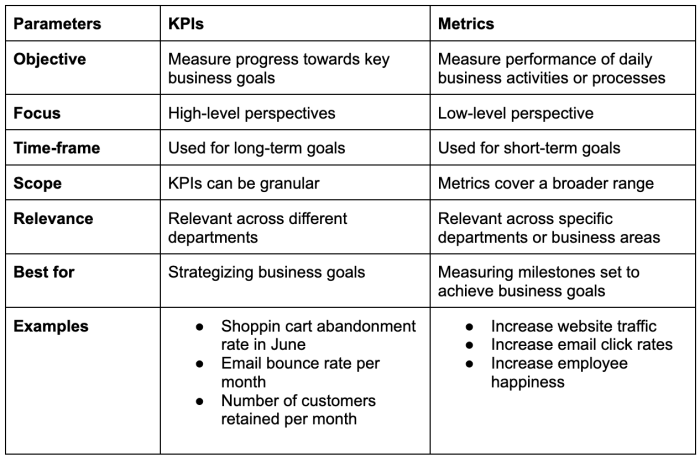
Selecting the right metrics is crucial for tracking progress and making informed decisions about a company’s future. Effective corporate growth measurement requires a strategic approach, focusing on metrics that directly reflect the company’s goals and provide actionable insights. These metrics should be specific, measurable, achievable, relevant, and time-bound (SMART). A balanced scorecard approach, incorporating financial, operational, and market-related perspectives, is often employed to gain a holistic view of growth.
Core Principles for Selecting Corporate Growth Metrics and KPIs
The selection of relevant corporate growth metrics and KPIs hinges on aligning them with the overarching business strategy. Metrics should be chosen to reflect the key drivers of growth within a specific industry and competitive landscape. It’s important to consider the availability of data, the reliability of measurement, and the cost of data collection. Finally, the chosen metrics should be easily understood and communicated across the organization to ensure alignment and accountability.
Key Corporate Growth Metrics
The following table presents a selection of key metrics used to measure corporate growth, categorized for clarity. Note that the specific calculation methods might vary depending on the industry and the specific context.
| Metric Name | Category | Definition | Calculation Method |
|---|---|---|---|
| Revenue Growth | Financial | The percentage increase in revenue over a specific period. | [(Current Revenue – Previous Revenue) / Previous Revenue] – 100 |
| Profit Margin | Financial | The percentage of revenue that remains as profit after deducting all expenses. | (Net Profit / Revenue) – 100 |
| Return on Investment (ROI) | Financial | A measure of the profitability of an investment relative to its cost. | (Net Profit / Cost of Investment) – 100 |
| Customer Acquisition Cost (CAC) | Operational | The cost of acquiring a new customer. | Total Marketing and Sales Costs / Number of New Customers Acquired |
| Customer Lifetime Value (CLTV) | Operational | The predicted revenue a customer will generate throughout their relationship with the company. | Average Purchase Value
|
| Customer Churn Rate | Operational | The percentage of customers who stop doing business with a company during a specific period. | (Number of Customers Lost / Number of Customers at the Beginning of the Period) – 100 |
| Market Share | Market-Related | The percentage of a market controlled by a specific company. | (Company Revenue / Total Market Revenue) – 100 |
| Brand Awareness | Market-Related | The extent to which consumers are familiar with a brand. | Measured through surveys, social media monitoring, and other market research techniques. |
| Website Traffic | Market-Related | The number of visitors to a company’s website. | Tracked through website analytics tools. |
| Net Promoter Score (NPS) | Market-Related | A measure of customer loyalty and satisfaction. | Calculated based on responses to a single survey question: “On a scale of 0 to 10, how likely are you to recommend [company] to a friend or colleague?” |
Industry-Specific Prioritization of Metrics
Different industries prioritize different sets of metrics. For example, a technology company might heavily emphasize metrics like website traffic, app downloads, and customer engagement, while a manufacturing company might focus on production efficiency, inventory turnover, and defect rates. A retail business, on the other hand, might prioritize metrics such as sales per square foot, conversion rates, and average order value.
The key is to select metrics that are most relevant to the specific industry’s challenges and opportunities.
Analyzing Revenue Growth
Understanding revenue growth is crucial for assessing a company’s overall health and future prospects. Analyzing revenue growth involves more than just looking at the top line; it requires a deep dive into the various methods of calculation and an understanding of the underlying factors driving the numbers. This analysis allows businesses to make informed strategic decisions, identify areas for improvement, and ultimately, drive sustainable growth.Revenue growth rates can be calculated using several methods, each offering a unique perspective on the company’s performance.
The choice of method depends on the specific needs of the analysis and the desired level of detail.
Revenue Growth Rate Calculation Methods
Different timeframes provide different insights. Year-over-year (YoY) growth compares revenue from the current year to the same period in the previous year. This provides a long-term perspective, smoothing out short-term fluctuations. Quarter-over-quarter (QoQ) growth, on the other hand, compares revenue from the current quarter to the previous quarter. QoQ analysis is useful for identifying short-term trends and seasonal patterns.
Other relevant periods, such as month-over-month (MoM) or even week-over-week (WoW) comparisons, can be used for even more granular analysis, depending on the business’s reporting cycle and the nature of its operations. The basic formula for calculating a revenue growth rate is:
(Current Period Revenue – Previous Period Revenue) / Previous Period Revenue – 100%
For example, if a company’s revenue was $10 million in Q1 2023 and $12 million in Q2 2023, the QoQ growth rate would be: ($12 million – $10 million) / $10 million – 100% = 20%.
Interpreting Revenue Growth Trends Using Visualizations
Visual representations are essential for understanding revenue growth trends. A simple line graph, for instance, can effectively display revenue changes over time. The x-axis represents the time period (e.g., quarters or years), and the y-axis represents the revenue amount. The line connecting the data points illustrates the revenue growth trajectory. A positive upward slope indicates growth, while a downward slope indicates decline.
A flat line signifies no change. More complex visualizations, such as area charts, can be used to highlight cumulative revenue over time. Bar charts are useful for comparing revenue across different segments or product lines. A stacked bar chart, for example, can show the contribution of each segment to overall revenue growth.
Revenue Growth Drivers
Understanding the factors driving revenue growth is critical for developing effective strategies. Several key drivers contribute to a company’s revenue growth, including market share gains, effective pricing strategies, and successful new product launches. Increased market share indicates a company’s ability to attract more customers and capture a larger portion of the overall market. A well-defined pricing strategy, balancing profitability with competitiveness, is crucial for revenue generation.
Successful new product launches can significantly boost revenue by introducing innovative offerings that meet unmet customer needs or expand the company’s product portfolio. Other factors such as increased sales efficiency, expansion into new markets, and strategic partnerships also play a significant role. Analyzing these drivers allows companies to identify strengths, weaknesses, and opportunities for further growth.
Measuring Operational Efficiency
Operational efficiency is crucial for corporate growth. It’s about maximizing output with available resources, leading to higher profitability and sustainable growth. Understanding and tracking key operational KPIs allows businesses to identify areas for improvement and optimize processes for better performance. This section will explore key operational KPIs, compare measurement methods, and provide a practical guide for implementation.
Key operational KPIs provide insights into various aspects of a business’s operational performance. These metrics offer a quantifiable way to assess efficiency and identify bottlenecks. Effective tracking and analysis of these KPIs are essential for informed decision-making and strategic planning.
Key Operational KPIs and Their Contribution to Growth
Customer acquisition cost (CAC), customer lifetime value (CLTV), and employee productivity are three crucial operational KPIs that significantly influence corporate growth. A low CAC indicates efficient marketing and sales strategies, while a high CLTV demonstrates customer loyalty and strong customer relationships. High employee productivity translates to increased output and efficiency across the organization. Understanding the interplay between these metrics is vital for achieving sustainable growth.
For example, a company with a high CAC might need to re-evaluate its marketing campaigns or sales processes to improve efficiency. Conversely, a high CLTV suggests a strong brand and successful customer retention strategies, which can be leveraged to further fuel growth. Similarly, increasing employee productivity can be achieved through investments in training, technology, or process optimization, ultimately driving increased output and revenue.
Comparing Methods for Measuring Operational Efficiency
Several methods exist for measuring operational efficiency, each with its strengths and weaknesses. These include analyzing ratios such as revenue per employee, cost of goods sold (COGS) as a percentage of revenue, and operating profit margin. Benchmarking against industry competitors or best practices also provides valuable insights into areas for improvement. Finally, using process mapping and time-motion studies can identify inefficiencies within specific workflows.
For instance, comparing revenue per employee across different departments can reveal discrepancies in productivity and efficiency. A low COGS percentage indicates effective cost management, while a high operating profit margin suggests strong profitability. Benchmarking allows companies to compare their performance to industry leaders, highlighting areas where they can improve and adopt best practices. Process mapping, on the other hand, allows for a visual representation of workflows, pinpointing bottlenecks and opportunities for optimization.
Implementing a System for Tracking and Analyzing Operational KPIs
Implementing a robust system for tracking and analyzing operational KPIs involves several key steps. First, identify the most relevant KPIs aligned with the company’s strategic goals. Second, establish a data collection process using existing systems or implementing new tools. Third, develop a reporting system to regularly monitor progress and identify trends. Fourth, analyze the data to identify areas for improvement and make data-driven decisions.
Finally, continuously review and refine the system based on performance and evolving business needs.
This systematic approach ensures that the chosen KPIs are accurately tracked, analyzed, and used to inform strategic decisions. Regular monitoring allows for proactive identification of issues and opportunities, leading to continuous improvement in operational efficiency and overall corporate growth. For example, a company might use a project management software to track employee productivity, or a CRM system to monitor customer acquisition cost and lifetime value.
Regular review and adjustments to the tracking system will ensure it remains relevant and effective.
Assessing Market Position and Share
Understanding your market position is crucial for sustained corporate growth. Market share analysis provides a clear picture of your company’s performance relative to competitors, highlighting strengths, weaknesses, and opportunities for expansion. By analyzing market share data, businesses can make informed decisions regarding product development, marketing strategies, and resource allocation, ultimately driving revenue growth and long-term success.Market share analysis provides valuable insights into the competitive landscape and helps businesses understand their overall market standing.
A high market share generally indicates strong brand recognition, effective marketing, and a competitive product or service. Conversely, a low market share might signal the need for strategic adjustments. This analysis is not simply about numbers; it’s about understanding the underlying reasons behind those numbers and using that understanding to inform strategic decisions.
Market Share Calculation and Interpretation
Market share is calculated by dividing a company’s sales revenue (or units sold) by the total sales revenue (or units sold) of the entire market for a specific period. This calculation can be performed for a specific product or service or across a company’s entire product portfolio. For example, if Company A sold $10 million worth of widgets in a market where total widget sales were $100 million, Company A’s market share would be 10% ($10 million / $100 million100%).
Interpreting market share requires considering factors such as market growth rate, competitive intensity, and the company’s overall strategic objectives. A small market share in a rapidly growing market might be more promising than a large share in a stagnant or declining market. Analyzing market share trends over time provides even more valuable insights into a company’s performance and market position.
Assessing the Competitive Landscape and Identifying Opportunities
A robust framework for assessing the competitive landscape should include several key elements. First, identify your key competitors. This involves understanding their strengths, weaknesses, strategies, and market positioning. Next, analyze their market share and identify any trends. Are they gaining or losing market share?
What are their strategies for growth? Further, examine the overall market size and growth rate. Is the market expanding or contracting? This information helps determine the potential for market share expansion. Finally, identify potential opportunities for differentiation and market share gains.
This could involve developing new products or services, improving existing offerings, targeting new customer segments, or implementing innovative marketing strategies. For example, a company might identify an underserved niche within the market, allowing them to focus their resources and marketing efforts on that specific segment, potentially leading to a significant increase in market share within that niche. Another strategy could be to leverage superior customer service or a unique brand identity to attract customers from competitors.
Careful analysis of the competitive landscape, coupled with a well-defined market strategy, will greatly enhance the probability of successful market share expansion.
The Role of Customer Acquisition and Retention
Understanding customer acquisition and retention is crucial for sustainable corporate growth. These two factors are intrinsically linked, and optimizing both is essential for building a thriving business. Focusing solely on one aspect, without considering the other, can lead to unsustainable growth or even decline. A balanced approach that prioritizes both efficient customer acquisition and effective retention strategies is key to long-term success.The relationship between customer acquisition cost (CAC) and customer lifetime value (CLTV) is fundamental to assessing the profitability and sustainability of growth.
Essentially, CLTV represents the total revenue a company expects to generate from a single customer over their entire relationship with the business, while CAC represents the cost of acquiring that customer. A healthy business model exhibits a CLTV significantly higher than its CAC, ensuring that each customer acquired contributes positively to the bottom line and overall profitability. A low CLTV relative to CAC indicates an unsustainable growth model, as the cost of acquiring customers exceeds the revenue generated from them.
Customer Acquisition Cost (CAC) and Customer Lifetime Value (CLTV) Relationship
A healthy business model requires a favorable ratio between CLTV and CAC. Ideally, CLTV should significantly exceed CAC, indicating profitability from customer acquisition efforts. For example, if a company spends $100 to acquire a customer (CAC) and that customer generates $500 in revenue over their lifetime (CLTV), the business has a positive return on investment. Conversely, if CAC is $200 and CLTV is only $100, the company is losing money on each customer acquisition.
Analyzing this ratio helps businesses refine their marketing strategies and optimize spending to maximize return. Companies can track these metrics over time to identify trends and adjust their strategies accordingly. This might involve optimizing marketing campaigns, refining targeting, or improving sales processes to reduce CAC or enhance CLTV. Regular monitoring and analysis of this ratio are essential for sustainable growth.
Strategies for Improving Customer Retention Rates and Reducing Churn
Effective customer retention strategies are vital for sustained growth, reducing reliance on continuous and costly customer acquisition. By focusing on improving customer loyalty and satisfaction, businesses can significantly reduce churn and boost profitability.
- Personalized Customer Experiences: Tailoring interactions and offers to individual customer preferences fosters loyalty and strengthens relationships. This could involve using data analytics to understand customer behavior and preferences, enabling the creation of personalized marketing campaigns, product recommendations, and customer service interactions.
- Proactive Customer Support: Addressing customer issues promptly and effectively minimizes frustration and enhances satisfaction. This includes providing multiple channels for customer support, such as email, phone, and live chat, and ensuring that support agents are well-trained and responsive.
- Loyalty Programs and Rewards: Offering exclusive rewards and benefits to loyal customers incentivizes repeat business and strengthens customer relationships. Examples include points-based systems, discounts, early access to new products, or exclusive events.
- Regular Customer Feedback Collection and Action: Actively seeking and responding to customer feedback demonstrates a commitment to improvement and strengthens customer relationships. This could involve conducting surveys, using feedback forms, or monitoring social media for customer comments and reviews.
- Community Building: Fostering a sense of community among customers through online forums, social media groups, or in-person events can increase engagement and loyalty. This helps to build relationships among customers and creates a sense of belonging.
Forecasting Future Customer Growth
Predicting future customer growth requires a model that incorporates both customer acquisition and retention rates. A simple model could utilize historical data to project future growth.
A basic forecasting model: Future Customer Base = (Current Customer Base + New Customer Acquisitions)
Customer Churn
For example, if a company currently has 1000 customers, acquires 200 new customers per month, and experiences a 10% monthly churn rate, the projected customer base after one month would be: (1000 + 200)
- (1000
- 0.10) = 1090 customers. This model can be refined by incorporating more sophisticated statistical methods or machine learning algorithms for greater accuracy, particularly when dealing with larger datasets and more complex factors influencing customer behavior. This approach allows businesses to make informed decisions regarding resource allocation, marketing investments, and overall business strategy. Furthermore, the model’s accuracy can be improved by segmenting customers based on their behavior and characteristics, enabling more precise predictions for each segment.
Corporate Growth and Corporate Training
Effective corporate training programs are not merely a cost; they are a strategic investment directly linked to improved corporate growth metrics. By enhancing employee skills and knowledge, organizations can significantly boost productivity, improve operational efficiency, and ultimately drive revenue growth. The connection lies in the ability of training to bridge the gap between existing capabilities and the demands of a dynamic business environment.Training initiatives directly contribute to the achievement of key performance indicators (KPIs) across various aspects of the business.
A well-designed training program aligns with overall corporate objectives, ensuring that employee development efforts are focused on areas with the greatest impact on growth. This alignment is crucial for demonstrating a clear return on investment.
Impact of Training on Operational Efficiency
Improved operational efficiency is a direct result of well-trained employees. Training equips staff with the necessary skills and knowledge to streamline processes, reduce errors, and optimize resource utilization. For example, a manufacturing company implementing a training program focused on lean manufacturing principles might see a reduction in waste, improved production times, and a decrease in defect rates. This directly translates into cost savings and increased profitability, positively impacting operational efficiency metrics such as production output per employee and defect rate.
Impact of Training on Employee Productivity
Investing in employee training leads to increased productivity. Employees equipped with the right skills are more confident, efficient, and capable of handling complex tasks. This increased efficiency translates into higher output, faster project completion, and improved overall performance. Consider a sales team undergoing product knowledge training. Their improved understanding of product features and benefits will likely lead to increased sales conversion rates and improved customer satisfaction scores.
This improved productivity directly impacts KPIs such as sales revenue per employee and customer satisfaction ratings.
Impact of Training on Customer Satisfaction
Customer satisfaction is directly linked to employee competence and professionalism. Training programs focused on customer service skills, product knowledge, and problem-solving techniques empower employees to provide superior customer experiences. This leads to increased customer loyalty, positive word-of-mouth referrals, and ultimately, higher revenue. For instance, a customer service team trained in conflict resolution techniques will be better equipped to handle challenging situations, resulting in improved customer satisfaction and reduced customer churn.
This is reflected in KPIs such as customer satisfaction scores (CSAT) and customer churn rate.
Measuring the ROI of Corporate Training
Measuring the return on investment (ROI) of corporate training programs is essential to demonstrate their value and secure continued investment. Several methods can be employed. One approach involves comparing pre- and post-training performance metrics, such as sales figures, productivity rates, or customer satisfaction scores. Another method involves calculating the cost savings resulting from reduced errors, improved efficiency, or decreased employee turnover.
A more comprehensive approach might involve using a combination of quantitative and qualitative data, including employee feedback surveys and performance evaluations, to gain a holistic understanding of the training’s impact. The formula for calculating ROI is often expressed as:
ROI = (Gain from Investment – Cost of Investment) / Cost of Investment
For example, if a training program cost $10,000 and resulted in a $20,000 increase in revenue, the ROI would be 100%. However, a more nuanced calculation might consider factors like employee time spent in training and other indirect costs. Therefore, a robust ROI analysis should encompass a range of metrics and consider both tangible and intangible benefits.
In conclusion, mastering corporate growth metrics and KPIs is not merely about tracking numbers; it’s about gaining a deep understanding of your business’s performance drivers. By effectively analyzing financial, operational, and market-related data, organizations can identify strengths, weaknesses, and opportunities for strategic improvement. Through continuous monitoring and adjustment based on these insights, businesses can optimize their strategies, enhance operational efficiency, and ultimately achieve sustainable and significant growth.
The journey towards robust growth is a continuous cycle of measurement, analysis, and refinement, driven by a clear understanding of the key metrics that truly matter.
FAQs
What are the limitations of using only financial KPIs for measuring corporate growth?
Relying solely on financial KPIs provides an incomplete picture. Operational inefficiencies or negative customer sentiment might not be reflected, potentially masking underlying issues that hinder long-term growth. A balanced scorecard approach, incorporating operational and market-related KPIs, is crucial for a comprehensive assessment.
How can I choose the right KPIs for my specific industry?
The optimal KPIs depend on your industry’s unique characteristics and business goals. Consider what aspects of your business are most critical for success (e.g., innovation in tech, customer service in retail). Research industry benchmarks and adapt them to your specific context. Prioritize KPIs that directly align with your strategic objectives.
How frequently should KPIs be reviewed and adjusted?
Regular review is essential. The frequency depends on the KPI and your business needs (e.g., daily for critical metrics, monthly for broader performance). Regular review allows for timely adjustments to strategies and resource allocation based on observed trends and performance deviations from targets.


