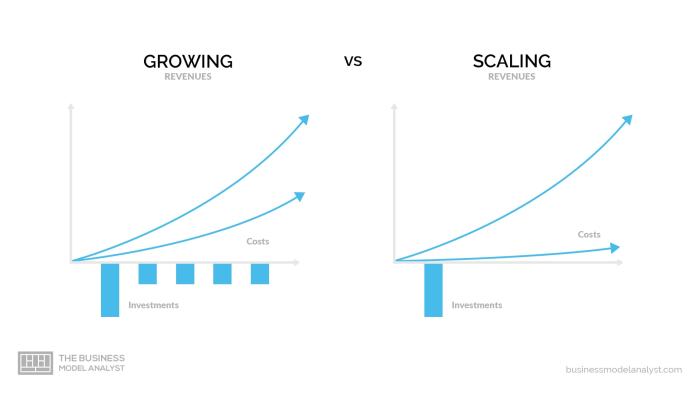
Successfully scaling a business requires a multifaceted approach, encompassing strategic planning, financial management, operational efficiency, and team development. This journey demands careful consideration of various factors, from securing adequate funding and automating processes to building a strong company culture and leveraging data-driven marketing strategies. Understanding the nuances of scalability across different dimensions – revenue, customer base, team size, and infrastructure – is paramount to achieving sustainable growth.
Navigating this complex landscape involves identifying and addressing bottlenecks, optimizing resource allocation, and mitigating potential risks. The process necessitates a proactive and adaptable mindset, allowing for adjustments based on performance indicators and market dynamics. Ultimately, the goal is to create a robust and resilient business model capable of sustained expansion and long-term success.
Defining Scalability for Business Growth
Scalability, in the context of business growth, refers to a company’s ability to increase its output (revenue, production, or service delivery) in response to growing demand without experiencing a disproportionate increase in costs or a significant reduction in efficiency. A scalable business can handle increasing volumes of work, customers, or transactions without major structural overhauls or a dramatic decrease in profit margins.
Understanding and achieving scalability is crucial for sustained and sustainable growth.Business scalability isn’t a single dimension; it’s multifaceted. Different aspects of a business need to scale effectively to support overall growth. Failing to address these aspects concurrently can create significant bottlenecks and limit the potential for expansion.
Dimensions of Business Scalability
Several key areas determine a business’s scalability. These include revenue generation, customer base expansion, team size and structure, and the underlying infrastructure supporting operations. Successfully scaling requires careful consideration and strategic planning across all these dimensions. For instance, simply increasing revenue without expanding the customer service team can lead to decreased customer satisfaction and potentially harm brand reputation.
Similarly, expanding the customer base without sufficient infrastructure can result in system failures and lost sales.
Examples of Successful and Unsuccessful Scaling
Many companies have demonstrated successful scaling. Netflix, for example, transitioned from DVD rentals to a global streaming giant by investing heavily in its technology infrastructure, content library, and international expansion. Their scalable platform allowed them to handle millions of concurrent users without significant performance degradation. In contrast, consider a small, locally-owned bakery. While they might experience high demand, their scaling might be limited by their physical space, baking capacity, and local workforce availability.
They may struggle to replicate their success beyond a limited geographical area. This illustrates the importance of considering the specific limitations and opportunities within a given business model.
Identifying Bottlenecks that Hinder Scalability
Identifying bottlenecks is critical to achieving successful scaling. These are points in the business process where efficiency is significantly reduced, limiting the ability to handle increased demand. Bottlenecks can be identified through various methods, including analyzing key performance indicators (KPIs), conducting customer feedback surveys, and observing operational processes. For example, a slow order fulfillment process might be a bottleneck for an e-commerce business, while inadequate marketing and sales infrastructure could limit customer acquisition for a SaaS company.
Addressing these bottlenecks often involves investments in technology, training, and process optimization. Proactive identification and resolution of these bottlenecks are crucial to ensure smooth scaling.
Strategic Planning for Scaling

Scaling a business successfully requires a well-defined strategic plan that considers operational efficiency, financial stability, and effective marketing strategies. This plan acts as a roadmap, guiding the company through the expansion process and mitigating potential risks associated with rapid growth. Without a robust plan, scaling can lead to inefficiencies, financial strain, and ultimately, failure.Strategic planning for scaling involves a thorough assessment of the current business state, identification of growth opportunities, and the development of actionable steps to achieve those goals.
It’s a dynamic process requiring constant monitoring and adaptation based on performance data and market changes.
Operational Scaling Plan
A comprehensive operational scaling plan addresses how the business will manage increased production, customer service demands, and overall operational complexity as it grows. This involves streamlining existing processes, investing in technology, and potentially restructuring teams. For example, a company experiencing rapid order growth might invest in automated order fulfillment systems to maintain efficiency and prevent delays. Another example could be a software company needing to scale its customer support team, potentially through the use of a ticketing system and knowledge base to handle a larger volume of inquiries more effectively.
Careful consideration of resource allocation and infrastructure upgrades is crucial for smooth scaling.
Financial Projections and Resource Allocation
Accurate financial projections are essential for securing funding, making informed investment decisions, and ensuring the business remains financially viable during the scaling process. This involves forecasting revenue growth, estimating expenses associated with expansion, and determining the required funding. A detailed financial model should project cash flow, profitability, and key financial ratios over the scaling period. For instance, a company planning to open new retail locations needs to accurately project startup costs, operating expenses, and anticipated revenue for each location to assess the financial feasibility of the expansion.
This financial model can be used to secure loans or attract investors.
Marketing and Sales Strategies for Growth
Scaling requires a robust marketing and sales strategy to reach a wider audience and maintain market share. This involves expanding marketing channels, refining targeting strategies, and potentially investing in new marketing technologies. For example, a company scaling its online presence might invest in paid advertising campaigns on social media platforms or search engines to reach a broader audience. Another example could be a company shifting from a direct sales model to a channel partner model to accelerate market penetration.
This could involve identifying and onboarding appropriate partners, developing joint marketing materials, and establishing clear sales targets.
Step-by-Step Implementation Guide with Timelines and Milestones
Implementing a scaling plan requires a phased approach with clearly defined timelines and milestones. This allows for progress tracking, identification of potential bottlenecks, and timely adjustments. The following example Artikels a simplified implementation plan:
- Phase 1 (Months 1-3): Assess current operational capacity, analyze financial statements, and define key marketing objectives. Milestone: Complete a comprehensive SWOT analysis and develop a detailed scaling plan.
- Phase 2 (Months 4-6): Implement process improvements, invest in necessary technology, and begin expanding marketing efforts. Milestone: Achieve a 15% increase in sales leads.
- Phase 3 (Months 7-12): Monitor key performance indicators (KPIs), adjust strategies as needed, and secure additional funding if required. Milestone: Achieve a 25% increase in overall revenue.
Key Performance Indicators (KPIs) for Monitoring Progress
Tracking key performance indicators (KPIs) is crucial for monitoring the success of the scaling plan and making data-driven adjustments. Relevant KPIs will vary depending on the specific business and industry, but generally include:
- Revenue growth
- Customer acquisition cost (CAC)
- Customer lifetime value (CLTV)
- Website traffic and conversion rates
- Operational efficiency metrics (e.g., order fulfillment time, customer service response time)
- Employee productivity
Regular monitoring of these KPIs allows for timely identification of areas needing improvement and ensures the scaling plan remains aligned with the business’s overall goals. For example, a significant increase in CAC while CLTV remains stable might indicate a need to refine the marketing strategy or adjust pricing.
Financial Strategies for Scaling
Scaling a business requires careful financial planning and management. Securing sufficient funding and effectively managing cash flow are crucial for sustainable growth. This section Artikels various funding options and strategies for projecting revenue and expenses to ensure long-term financial health.
Funding Options for Business Scaling
Choosing the right funding source depends on several factors, including the business’s stage of development, risk tolerance, and the amount of capital needed. Different funding options offer varying levels of control and dilution.
- Bootstrapping: This involves funding the business using personal savings, revenue generated from sales, and profitable reinvestment. It offers complete control but can limit growth speed due to limited capital. A successful example is the early growth of many tech startups, which used their initial revenue to fuel further development and expansion, delaying external investment.
- Venture Capital (VC): Venture capitalists invest in high-growth potential companies in exchange for equity. VC funding provides significant capital but requires relinquishing a portion of ownership and adhering to investor expectations. Companies like Airbnb and Uber are prime examples of businesses that leveraged VC funding to achieve rapid scaling.
- Loans: Bank loans, Small Business Administration (SBA) loans, and other debt financing options provide capital without equity dilution. However, they require repayment with interest and can be challenging to secure, particularly for startups. Many established small businesses rely on lines of credit or term loans to finance expansion projects, such as purchasing new equipment or hiring additional staff.
- Angel Investors: Angel investors are high-net-worth individuals who provide capital in exchange for equity. Similar to VC, this involves relinquishing ownership but often offers more flexibility and mentorship than larger VC firms. Numerous successful startups have benefited from the financial support and guidance of angel investors.
Cash Flow Management During Scaling
Maintaining a healthy cash flow is paramount during scaling. Unexpected expenses and delays in revenue can quickly derail growth plans. Effective cash flow management requires careful monitoring, forecasting, and proactive strategies.
Strategies include implementing robust invoicing and payment systems, negotiating favorable payment terms with suppliers, and accurately forecasting expenses. Regularly reviewing cash flow projections and adjusting spending as needed helps prevent cash shortages and ensures operational efficiency. For instance, a company expanding into a new market might need to increase its marketing budget, but it needs to ensure it has the cash flow to support this increase without compromising other areas of the business.
Projecting Future Revenue and Expenses
Accurate financial projections are essential for securing funding, making informed decisions, and ensuring long-term financial sustainability. This involves forecasting revenue based on market analysis, sales projections, and pricing strategies, while meticulously estimating expenses related to operations, marketing, and personnel.
A common method is to use financial modeling software or spreadsheets to create detailed financial statements, including income statements, balance sheets, and cash flow statements. These projections should consider various scenarios, including best-case, worst-case, and most likely outcomes. For example, a company launching a new product might project different revenue levels based on varying market penetration rates and customer adoption levels.
By incorporating these varying scenarios, businesses can create contingency plans and make more informed decisions about resource allocation and investment.
Accurate forecasting is crucial. A realistic projection of revenue and expenses is essential for securing funding and making informed decisions.
Operational Efficiency and Automation
Scaling a business successfully often hinges on optimizing operational efficiency. Automation plays a crucial role in achieving this, allowing businesses to streamline processes, reduce manual labor costs, and improve overall productivity. By strategically implementing automation tools, companies can free up valuable employee time, minimize errors, and ultimately enhance their bottom line. This section will explore key areas where automation can be beneficial, compare various automation technologies, and Artikel a plan for successful implementation.Automating various aspects of business operations offers significant advantages.
It not only reduces operational costs but also increases speed and accuracy, leading to improved customer satisfaction and a stronger competitive edge. This section will detail how to identify prime areas for automation and implement it effectively, minimizing disruption and maximizing benefits.
Identifying Automation Opportunities
Businesses should conduct a thorough assessment of their current operational processes to pinpoint areas ripe for automation. This involves analyzing workflows, identifying bottlenecks, and evaluating tasks that are repetitive, time-consuming, or prone to human error. Examples include data entry, customer service interactions, inventory management, and marketing campaigns. Prioritizing areas with the highest potential for return on investment (ROI) is key to a successful automation strategy.
A cost-benefit analysis for each potential automation project can help in this prioritization. For instance, automating invoice processing could significantly reduce the time spent on manual data entry and reconciliation, resulting in substantial cost savings and improved accuracy.
Comparing Automation Tools and Technologies
A wide array of automation tools and technologies are available, each suited to different business functions. Robotic Process Automation (RPA) software can automate repetitive tasks like data entry and invoice processing. Customer Relationship Management (CRM) systems with automation features can streamline customer interactions and personalize marketing campaigns. Enterprise Resource Planning (ERP) systems integrate various business functions, automating processes like inventory management and supply chain operations.
The choice of tools depends on specific business needs, budget, and technical expertise. For example, a small business might opt for cloud-based RPA solutions, while a large enterprise might invest in a comprehensive ERP system with built-in automation capabilities.
Implementing Automation: A Strategic Plan
Successful automation implementation requires a well-defined plan. This includes selecting appropriate tools, designing automated workflows, and providing adequate training and support to employees. A phased approach, starting with pilot projects in less critical areas, can minimize risk and allow for iterative improvements. Comprehensive employee training is crucial to ensure smooth transition and adoption of new technologies. Ongoing support and monitoring are essential to identify and address any issues that may arise.
For instance, a company implementing a new CRM system might begin with a small team to test the system’s functionality and provide feedback before a full company rollout. This phased approach reduces the risk of widespread disruption and allows for adjustments based on initial experiences.
Team Building and Talent Acquisition for Growth
Scaling a business necessitates a robust and adaptable workforce. Rapid growth demands strategic recruitment and retention of top talent, coupled with a strong company culture and effective employee upskilling initiatives. Failing to address these aspects can severely hamper a company’s ability to capitalize on its expansion.Successful scaling hinges on attracting and retaining individuals who not only possess the necessary skills but also align with the company’s vision and values.
This requires a multifaceted approach encompassing competitive compensation and benefits, a positive work environment, and opportunities for professional development.
Strategies for Recruiting and Retaining Top Talent During Rapid Growth
Attracting and retaining top talent during periods of rapid expansion requires a proactive and multifaceted approach. A strong employer brand, competitive compensation packages, and a clear career progression path are all crucial elements. Furthermore, prioritizing employee well-being and fostering a positive work environment are key to reducing employee turnover.
- Competitive Compensation and Benefits: Offering salaries and benefits packages that are competitive within the industry is essential to attracting and retaining top talent. This may involve offering above-market salaries, comprehensive health insurance, paid time off, and other perks.
- Employee Referral Programs: Leveraging existing employees’ networks through referral programs can be a cost-effective and efficient way to identify and recruit qualified candidates who are already familiar with the company culture.
- Targeted Recruitment Campaigns: Utilizing targeted recruitment campaigns on platforms like LinkedIn, industry-specific job boards, and university career fairs allows for reaching specific talent pools relevant to the company’s needs.
- Continuous Feedback and Performance Reviews: Regular performance reviews and feedback sessions provide opportunities for employees to express their concerns, receive recognition for their contributions, and identify areas for improvement. This demonstrates a commitment to employee growth and development.
- Opportunities for Professional Development: Providing opportunities for professional development, such as training programs, mentorship opportunities, and tuition reimbursement, demonstrates a commitment to employee growth and can improve retention rates.
The Importance of Creating a Strong Company Culture to Attract and Retain Employees
Company culture plays a vital role in attracting and retaining top talent. A positive and inclusive work environment fosters employee engagement, boosts morale, and reduces turnover. This includes promoting open communication, recognizing and rewarding employees’ contributions, and providing opportunities for professional growth and development. Companies with strong cultures often experience higher employee satisfaction, improved productivity, and a stronger employer brand.For example, companies like Google and Salesforce are renowned for their strong cultures, which include perks like on-site amenities, generous benefits, and a focus on employee well-being.
These aspects contribute significantly to their ability to attract and retain top talent in a competitive market.
Designing a Training Program to Upskill Existing Employees to Meet the Demands of a Larger Organization
As a company scales, the skills and expertise required from employees may evolve. A well-structured training program ensures that existing employees possess the necessary competencies to handle increased responsibilities and contribute effectively to the expanded organization. This involves identifying skill gaps, developing relevant training materials, and providing opportunities for ongoing learning and development.A comprehensive training program might include:
- Needs Assessment: Conducting a thorough needs assessment to identify the specific skills and knowledge gaps within the existing workforce.
- Curriculum Development: Developing a tailored training curriculum that addresses the identified skill gaps and aligns with the company’s strategic goals.
- Delivery Methods: Utilizing a variety of delivery methods, such as online courses, workshops, mentoring programs, and on-the-job training, to cater to different learning styles and preferences.
- Performance Evaluation: Implementing a system for evaluating the effectiveness of the training program and making necessary adjustments to ensure its ongoing relevance and efficacy.
- Ongoing Development: Providing ongoing opportunities for professional development to keep employees’ skills current and relevant to the evolving needs of the organization.
Marketing and Sales Strategies for Expansion
Scaling a business requires a robust and adaptable marketing and sales strategy to reach a wider audience and efficiently manage increased demand. A well-defined approach ensures that marketing efforts align with sales capabilities, maximizing return on investment and fostering sustainable growth. This involves carefully selecting marketing channels, refining sales processes, and leveraging data to optimize performance.
Expanding market reach during scaling necessitates a multi-faceted marketing approach. Simply increasing marketing spend isn’t enough; it requires strategic allocation across channels that effectively target the desired customer segments. This strategic shift ensures that marketing dollars are used effectively, reaching the right customers at the right time.
Marketing Strategies for Reaching a Wider Customer Base
Effective marketing during scaling involves a blend of strategies tailored to reach diverse customer segments. A balanced approach across different channels ensures broad reach and avoids over-reliance on any single method.
Several marketing strategies prove particularly effective during periods of business expansion. These strategies focus on building brand awareness, generating leads, and converting prospects into paying customers efficiently and effectively.
- Digital Marketing: This encompasses Search Engine Optimization (), Search Engine Marketing (SEM), social media marketing, content marketing (blog posts, videos, infographics), and email marketing. focuses on organic search visibility, while SEM utilizes paid advertising to drive traffic. Social media builds brand awareness and engagement, content marketing establishes thought leadership, and email marketing nurtures leads and drives conversions.
- Content Marketing: Creating high-quality, valuable content (blog posts, case studies, white papers, webinars) attracts and engages target audiences. This strategy builds trust and positions the business as an industry leader, attracting potential customers organically. For example, a SaaS company could create case studies showcasing successful customer implementations.
- Public Relations (PR): Securing media coverage (press releases, media kits, influencer outreach) enhances brand visibility and credibility. Positive media attention can significantly boost brand awareness and drive customer acquisition. A successful PR campaign can generate significant organic reach and build trust.
- Strategic Partnerships: Collaborating with complementary businesses expands reach and access to new customer segments. Partnering with companies that serve similar but non-competing markets can mutually benefit both organizations, creating a synergistic effect.
Adapting Sales Processes for Increased Demand
As demand increases, sales processes must be optimized for efficiency and scalability. This involves streamlining workflows, automating tasks, and empowering the sales team to handle a larger volume of leads and customers effectively.
Scaling sales requires a proactive approach to ensure that the sales team can effectively handle the increased volume of leads and sales transactions. This often involves the adoption of new technologies and strategies to enhance efficiency and productivity.
- Salesforce Automation (CRM): Implementing a Customer Relationship Management (CRM) system centralizes customer data, automates tasks (lead management, follow-up), and improves sales team productivity. This allows sales representatives to focus on higher-value activities, like closing deals and building relationships.
- Streamlined Sales Processes: Optimizing sales workflows by removing unnecessary steps and bottlenecks ensures efficiency. This may involve implementing standardized sales scripts, automating lead qualification, and using sales enablement tools to support the sales team.
- Sales Team Training and Empowerment: Equipping the sales team with the necessary skills, tools, and knowledge to handle increased demand is crucial. This includes training on sales techniques, product knowledge, and CRM usage.
- Scaling the Sales Team: As demand grows, expanding the sales team might be necessary. This could involve hiring additional sales representatives, creating new sales teams, or outsourcing sales functions.
Leveraging Data Analytics to Optimize Marketing and Sales Efforts
Data analytics provides valuable insights into customer behavior, marketing campaign performance, and sales effectiveness. By analyzing data, businesses can identify areas for improvement, optimize campaigns, and make data-driven decisions to enhance both marketing and sales outcomes.
Data-driven decision-making is crucial for effective scaling. By tracking key metrics and analyzing the results, businesses can continuously improve their marketing and sales strategies, maximizing their return on investment (ROI).
- Website Analytics: Tracking website traffic, user behavior, and conversion rates provides insights into website effectiveness and areas for improvement. Tools like Google Analytics provide detailed data on website performance.
- Marketing Campaign Analytics: Measuring the effectiveness of marketing campaigns (email open rates, click-through rates, conversion rates) helps optimize future campaigns. A/B testing different versions of marketing materials can identify which versions perform best.
- Sales Performance Analytics: Tracking sales metrics (lead conversion rates, average deal size, sales cycle length) identifies areas for improvement in the sales process. Analyzing sales data can reveal bottlenecks and opportunities for optimization.
- Customer Segmentation: Grouping customers based on shared characteristics (demographics, behavior, purchase history) allows for targeted marketing and personalized messaging. This enhances campaign effectiveness and improves customer engagement.
Technology and Infrastructure for Scalability
Scaling a business effectively requires a robust and adaptable technological infrastructure. The right technology can streamline operations, improve efficiency, and ultimately drive growth. Choosing the appropriate solutions and implementing them strategically is crucial for long-term success. This section will explore the key technological components necessary for scalable growth and offer a framework for planning their implementation.The technological infrastructure needed to support business growth encompasses a range of systems and tools designed to handle increasing workloads and data volumes.
This includes cloud computing solutions for flexible resource allocation, Customer Relationship Management (CRM) systems for efficient customer interaction management, and robust data management systems capable of handling exponential data growth. The selection process should carefully consider factors such as cost-effectiveness, scalability potential, and integration with existing systems.
Cloud Computing Solutions for Scalability
Cloud computing offers unparalleled scalability by providing on-demand access to computing resources, such as servers, storage, and databases. This eliminates the need for large upfront investments in hardware and allows businesses to scale resources up or down as needed, responding dynamically to changing demands. Major cloud providers like Amazon Web Services (AWS), Microsoft Azure, and Google Cloud Platform (GCP) offer a range of services tailored to different business needs and scales.
Choosing the right cloud provider depends on factors like budget, required features, and existing IT infrastructure. For example, a rapidly growing startup might opt for a pay-as-you-go model offered by AWS, while a larger enterprise might prefer the more comprehensive suite of tools provided by Azure.
Customer Relationship Management (CRM) Systems for Growth
A scalable CRM system is vital for managing customer interactions and data as a business expands. A robust CRM allows businesses to track customer interactions, manage sales pipelines, and personalize marketing efforts. Choosing a CRM system requires careful consideration of the features needed to support growth, such as automation capabilities, integration with other systems, and scalability to handle a growing number of customers.
For instance, a small business might start with a simpler CRM like HubSpot, while a larger enterprise might require a more comprehensive solution like Salesforce, capable of handling millions of customer records and complex workflows.
Implementing and Maintaining Technological Infrastructure
Implementing and maintaining the necessary technology infrastructure involves a phased approach. This includes a thorough assessment of current infrastructure, identifying gaps and areas for improvement, selecting appropriate technologies, and developing a comprehensive implementation plan. Ongoing maintenance includes regular updates, security patching, and performance monitoring. This requires a skilled IT team or partnerships with external IT service providers.
A well-defined plan should include timelines, resource allocation, and contingency plans to address potential challenges. For example, a company might implement a new CRM system in phases, starting with a pilot program in one department before rolling it out company-wide. This phased approach minimizes disruption and allows for iterative improvements.
Scaling a business for growth is a dynamic and challenging process that demands meticulous planning, adaptable strategies, and a commitment to continuous improvement. By thoughtfully addressing financial considerations, operational efficiency, team building, and marketing strategies, businesses can navigate the complexities of expansion and achieve sustainable growth. A proactive approach to risk management, coupled with a data-driven decision-making process, will significantly increase the likelihood of success in this transformative journey.
Remember, consistent evaluation and adaptation are key to navigating the ever-changing landscape of the business world.
Key Questions Answered
What are some common signs that a business is ready to scale?
Consistent revenue growth, high customer demand exceeding current capacity, a proven business model, and a strong team are key indicators.
How can I determine the right pace of scaling?
The ideal pace depends on various factors, including available resources, market conditions, and internal capabilities. Start with incremental scaling and adjust based on performance.
What is the importance of measuring KPIs during scaling?
KPIs provide crucial data-driven insights into the effectiveness of scaling strategies, allowing for timely adjustments and ensuring the business remains on track towards its goals.
How can I avoid common scaling pitfalls?
Thorough planning, careful resource allocation, a strong leadership team, and a flexible approach to adapting to changing circumstances are crucial to mitigating risks.


